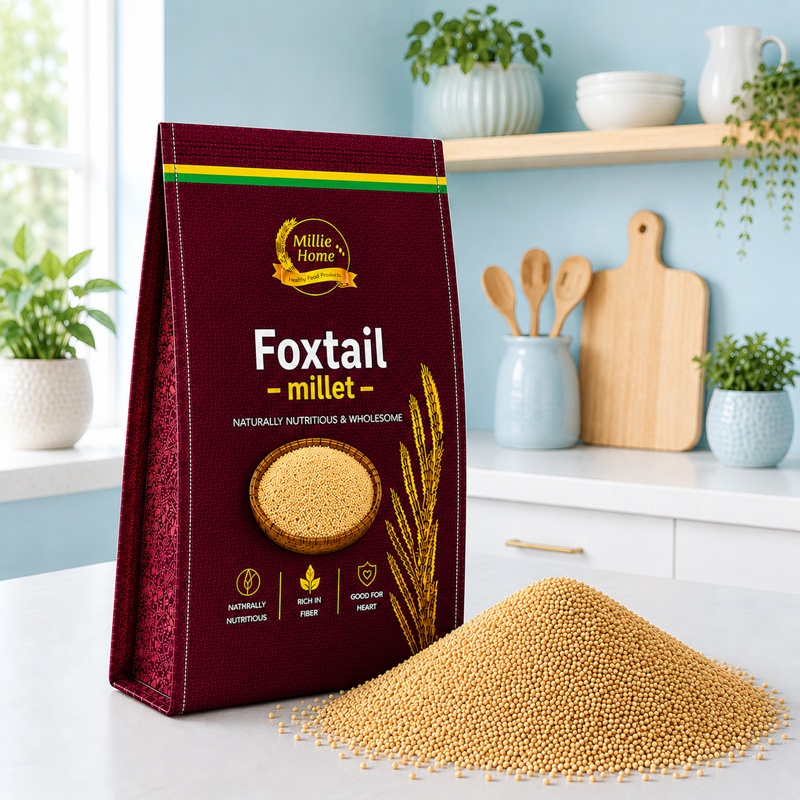
Foxtail Millet (തിന) is one of the oldest cultivated cereal grains and has been enjoyed across Asia for thousands of years. Its small seeds grow well in dry and semi-arid regions, making it a naturally resilient grain. You can enjoy it as a whole grain in porridge, upma, pulao, idli, dosa, and other everyday dishes. It also works well when ground into flour for both traditional and modern recipes.
Nutritionally, foxtail millet provides dietary fibre, protein, and complex carbohydrates. Its naturally low glycaemic index and slow-digesting carbohydrates help provide steady energy and support healthy blood sugar management. Therefore, it offers a wholesome alternative to refined grains and rice.
In addition, foxtail millet contains minerals such as iron, calcium, magnesium, and phosphorus. It also provides vitamins, including niacin and riboflavin. As a naturally gluten-free grain, it can suit a wide range of diets and meals. Its antioxidants and phytochemicals further add to its nutritional value and support overall well-being as part of a balanced diet.
Nutrition Facts (Per 100g)
| Energy (Kcal) |
331 |
| Protein (g) |
12.3 |
| Carbohydrate (g) |
60.9 |
| Fat (g) |
4.3 |
| Crude Fibre (g) |
8.0 |
| Iron (mg) |
2.8 |
| Phosphorus (mg) |
290 |
| Calcium (mg) |
31 |
| Magnesium (mg) |
81 |
| Thiamin (mg) |
0.59 |
| Riboflavin (mg) |
0.11 |
| Niacin (mg) |
3.2 |
Foxtail Millet Benefits
Foxtail Millet (തിന) is a nutrient-dense grain that offers a range of benefits as part of a balanced diet. Its low glycaemic index and high fibre content support slower digestion, help you feel fuller for longer, and may support healthy blood sugar levels. As a result, it can be a wholesome choice for everyday meals.
It also provides plant-based protein and essential minerals, including iron, magnesium, and phosphorus. These nutrients support normal energy production, muscle and nerve function, and bone health. In addition, foxtail millet is naturally gluten-free and can be a suitable grain choice for people who need to avoid gluten.
Foxtail millet contains antioxidants that support overall well-being. When included regularly in a balanced diet, it may also support heart health, healthy weight management, and steady energy throughout the day.