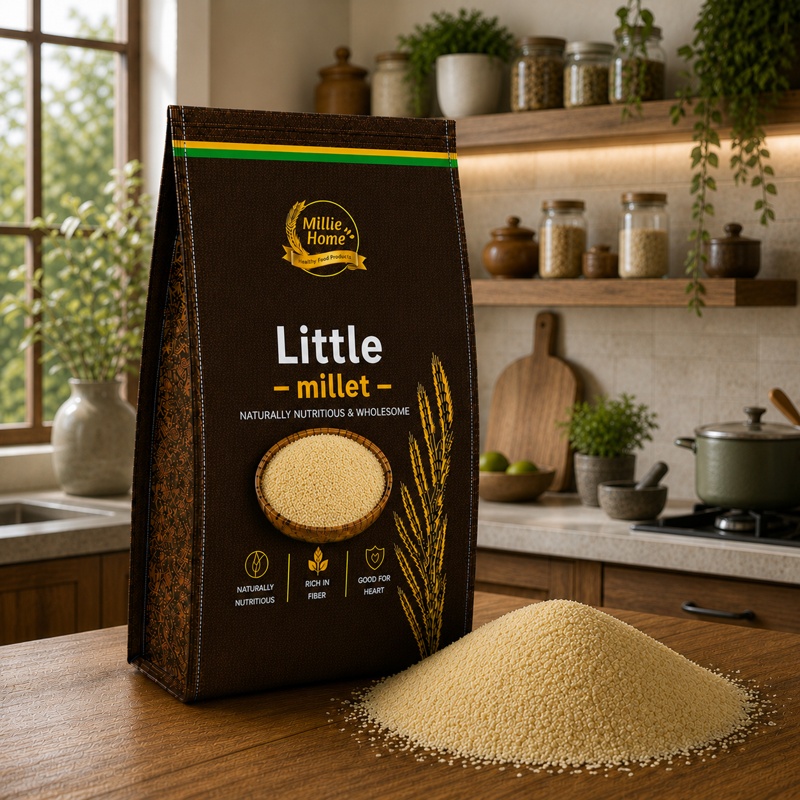
Little Millet (ചാമ) is a traditional cereal crop cultivated across India. Moreover, it belongs to the same family as Proso millet, although its grains are smaller in size. People commonly consume it as a whole grain, and they can also process it into flour or use it in various traditional dishes.
Furthermore, Little millet provides dietary fibre and complex carbohydrates that digest slowly and support balanced blood sugar levels. This slower digestion helps moderate glucose absorption into the bloodstream. Therefore, people can include it as part of a balanced diet focused on maintaining healthy blood glucose levels.
In addition, Little millet contains bioactive compounds such as phenols, tannins, and phytates. These compounds provide antioxidant properties and add to its nutritional value. Consequently, including Little millet in a balanced diet can contribute to overall nutritional well-being.
Nutrition Facts (Per 100g)
| Protein (g) |
9.7 |
| Carbohydrate (g) |
60.9 |
| Fat (g) |
5.2 |
| Iron (mg) |
9.3 |
| Phosphorus (mg) |
220 |
| Calcium (mg) |
17 |
| Magnesium (mg) |
114 |
| Energy (Kcal) |
329 |
| Crude Fibre (g) |
7.6 |
| Ash (g) |
5.4 |
| Thiamin (mg) |
0.30 |
| Riboflavin (mg) |
0.09 |
| Niacin (mg) |
3.2 |
Little Millet (ചാമ) Benefits
Little Millet (ചാമ) provides dietary fibre and complex carbohydrates that can support steady blood glucose levels. Moreover, its slower digestion may help the body absorb carbohydrates more gradually as part of a balanced diet.
It also provides magnesium, which supports normal muscle and nerve function. Additionally, niacin (vitamin B3) helps the body convert food into energy, while phosphorus supports energy metabolism and normal cell function.
Little millet is naturally gluten-free, so people following a gluten-free diet can use it as a grain alternative. Therefore, it can fit easily into a variety of balanced meals and traditional recipes.
The grain also contains plant compounds such as phenols and tannins, which have antioxidant properties. However, current evidence does not support using millet as a direct treatment for conditions such as asthma. Instead, you can enjoy its overall nutritional value as part of a varied and balanced diet.